
Potter's wheel
Machine for shaping clay into round ceramic ware.

Lomrjyo · CC BY-SA 4.0
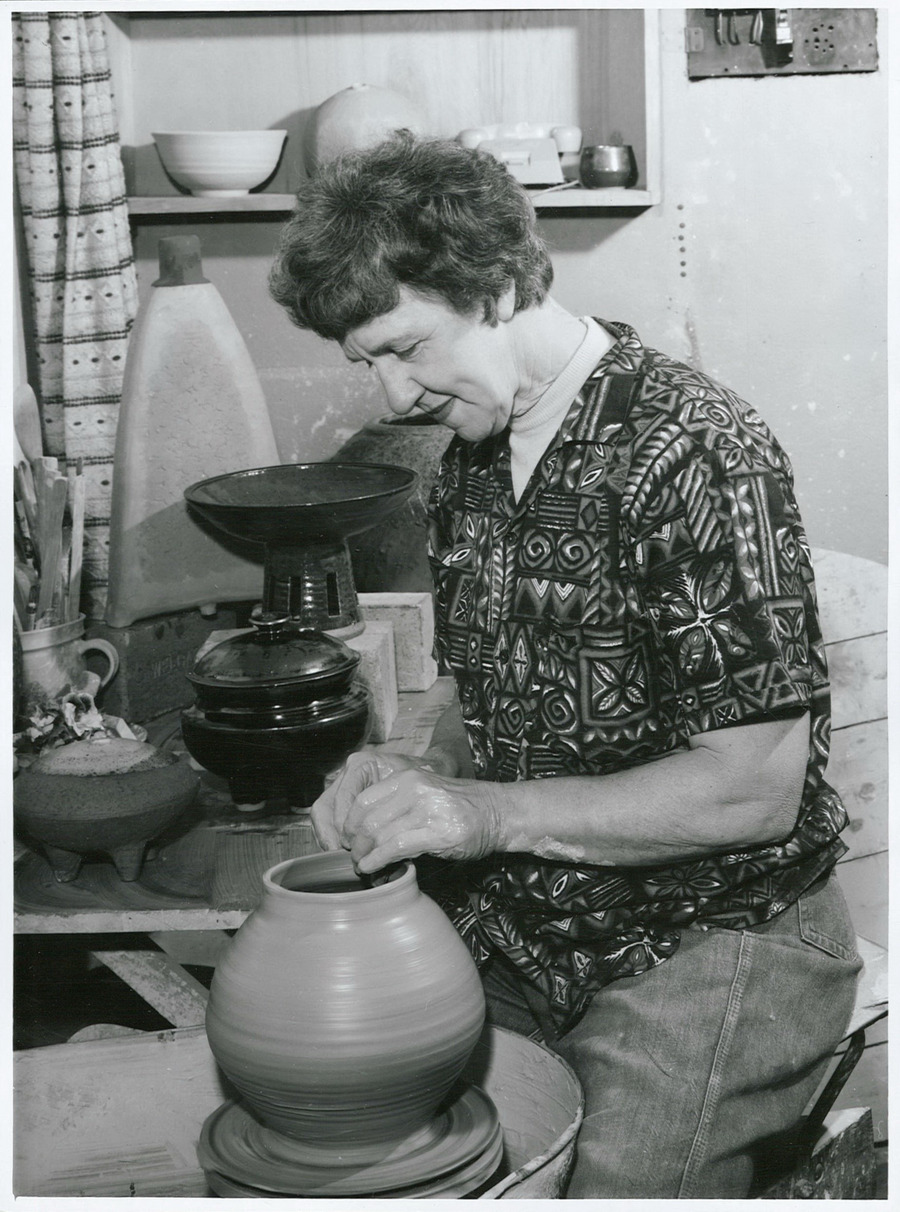
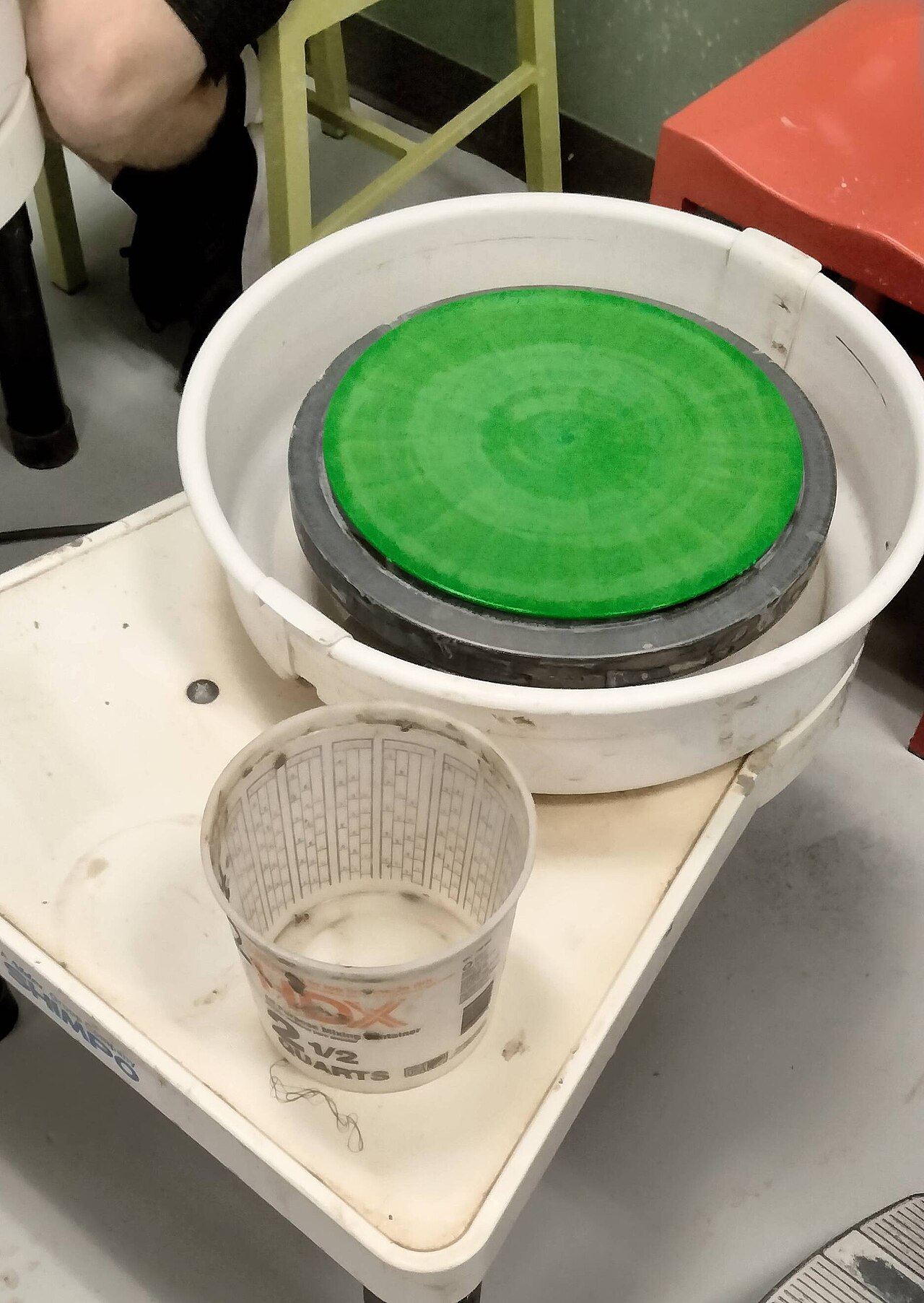
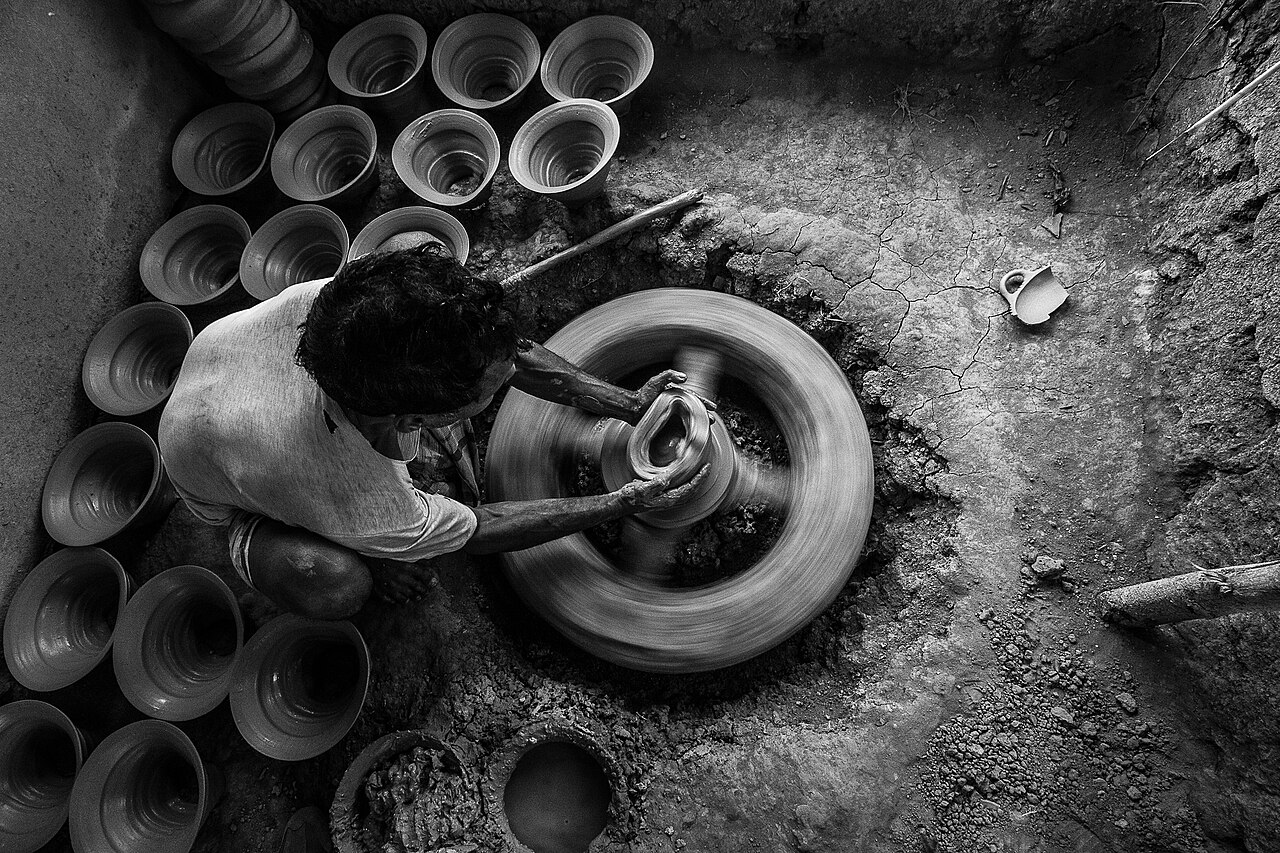
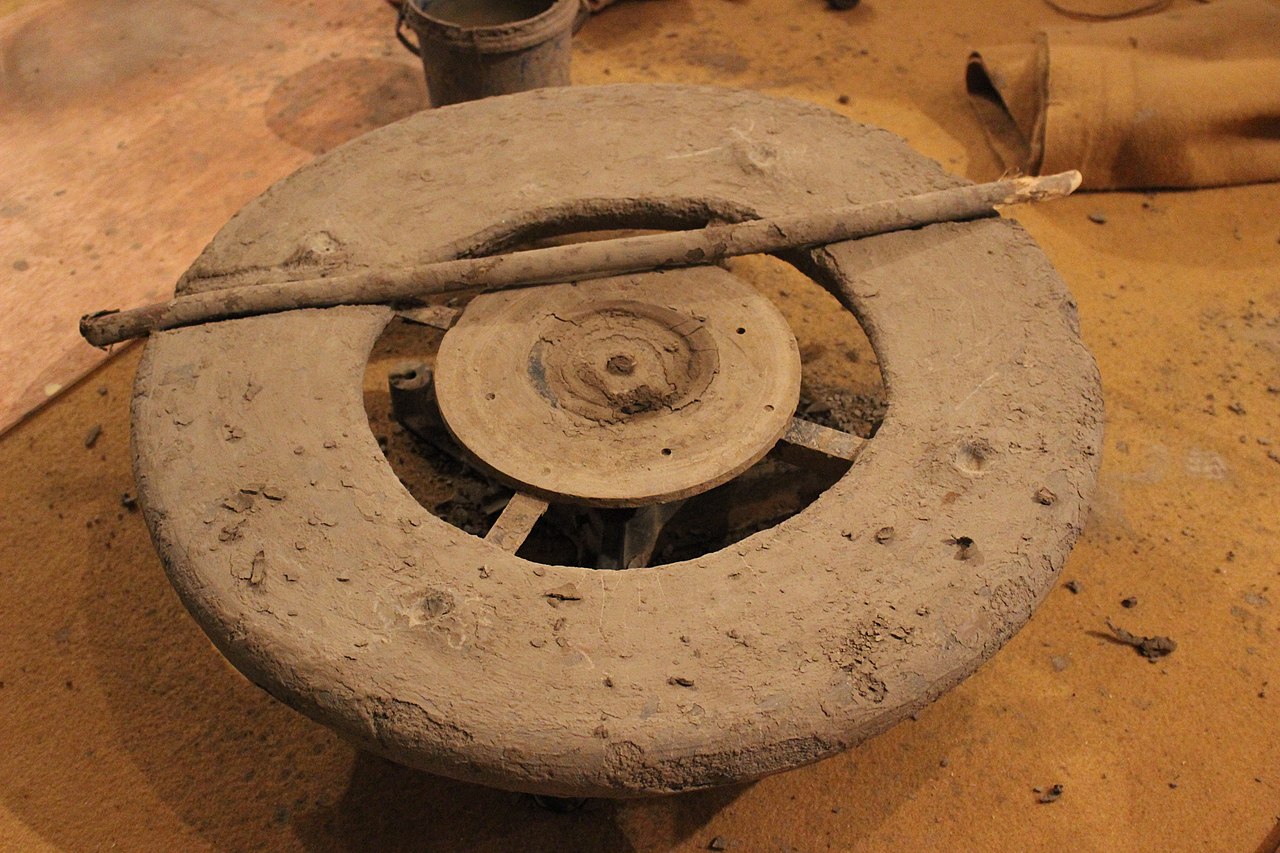
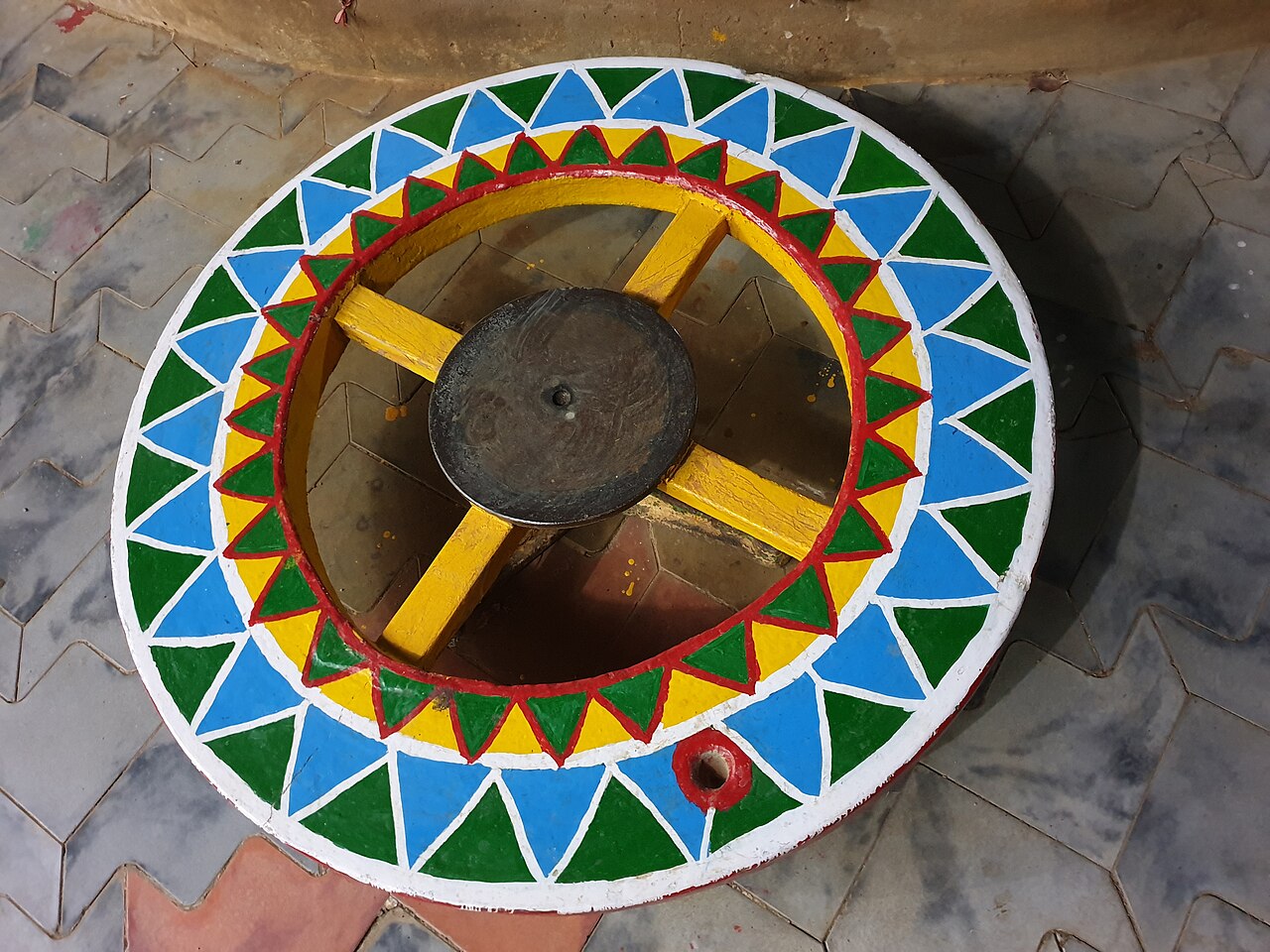
The potter's wheel is a machine used in the shaping (known as throwing) of clay into round ceramic ware. It may also be used for trimming excess clay from leather-hard dried ware and for applying incised decoration or rings of colour. Use of the potter's wheel became widespread throughout the Old World but was unknown in the Pre-Columbian New World, where pottery was handmade by methods that included coiling and beating.
- earliest known example
- Middle of the 5th millennium BC (Cucuteni–Trypillia culture, western Ukraine)
- type
- Machine for shaping clay
- related techniques
- Jiggering (flat ware), jolleying (hollow ware)
- key innovation
- Fast wheel (mid to late 3rd millennium BC) operating on flywheel principle
- common modern power source
- Motor-driven wheel
Lore & Background
Prior to using a wheel, civilizations used techniques such as pinching, coiling, paddling, and shaping to create ceramic forms. The oldest forms of the potter's wheel, called tourneys or slow wheels, were probably developed as an extension of coiling. The fast wheel was developed in the mid to late 3rd millennium BC, operating on the flywheel principle, and enabled throwing, a process that could produce thinner-walled pieces and a wider variety of shapes. Many modern scholars suggest the potter's wheel was first developed by the ancient Sumerians in Mesopotamia, but southeastern Europe and China have also been claimed as possible places of origin. A potter's wheel from the Cucuteni–Trypillia culture in western Ukraine, dated to the middle of the 5th millennium BC, is the oldest ever found. Thus, the exact origin is not wholly clear.
Reader's Guide
The potter's wheel represents a significant technological advancement in ceramic production, greatly increasing the rate of pottery manufacture and serving as a first step towards industrialization. Its development allowed for thinner-walled pieces, a wider variety of shapes, and the ability to produce many more pots per hour. The wheel's evolution from slow tournettes to fast flywheel-driven wheels transformed pottery from a hand-building craft into a more efficient, semi-industrial process. Social consequences included increased economic advancements in the sales of pottery, though in some regions, such as Japan, industrialization led to a loss of some historical techniques and meanings. The potter's wheel remains central to studio pottery and educational institutions, with both motor-driven and human-powered versions in use. Its legacy is evident in the global spread of wheel-thrown ceramics and the continued practice of throwing as a core pottery technique.
Did You Know?
- The oldest potter's wheel ever found, from the Cucuteni–Trypillia culture in western Ukraine, dates to the middle of the 5th millennium BC.
- The fast wheel, developed in the mid to late 3rd millennium BC, operated on the flywheel principle and was wound up by kicking or pushing with a stick.
- In the Iron Age, the potter's wheel had a turning platform about one metre over the floor connected by a long axle to a heavy flywheel at ground level.
- The techniques of jiggering and jolleying are extensions of the potter's wheel: jiggering shapes flat ware like plates, while jolleying produces hollow ware like cups.
Gallery
Frequently Asked Questions
What is a potter's wheel and what does it do?
A potter's wheel is a rotating machine specifically designed for shaping clay into round ceramic vessels through a process called throwing. It can also serve secondary purposes like trimming excess clay from leather-hard pieces or adding incised decorative patterns and rings of colour.
What was the biggest mechanical breakthrough in potter's wheel design?
The introduction of the fast wheel in the mid-to-late 3rd millennium BC, which operated on a flywheel principle to maintain consistent rotational speed. Modern versions typically replace that manual mechanism with a motor-driven system.
Did every ancient culture use a potter's wheel?
No. The wheel spread widely across the Old World, but pottery in the Pre-Columbian New World was shaped entirely by hand using coiling and beating techniques, with no wheel involved.
What related techniques extend the potter's wheel concept?
Jiggering and jolleying are two derivative methods that apply wheel-based shaping to flat ware and hollow ware respectively, broadening the original throwing technique into more specialized production processes.
More in Manufacturing & Materials 1-20
Spotted an error? Know more?
This is a living reference — every entry is fact-audited, and reader corrections feed straight into our audit queue. Suggest an edit · See this site's audit record