
Loom
Device that holds warp threads under tension for weaving cloth.

Matthew T Rader · CC BY-SA 4.0
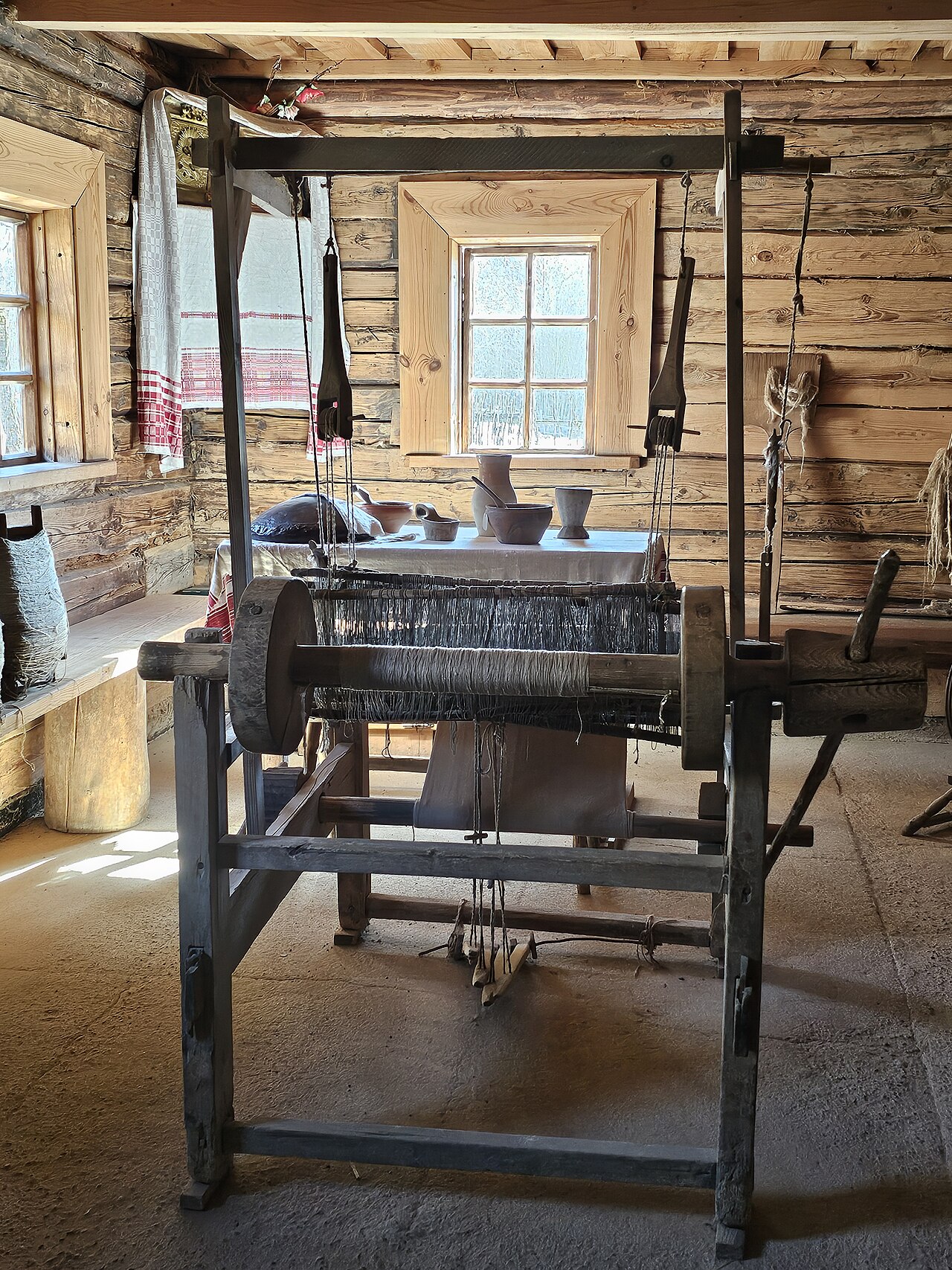
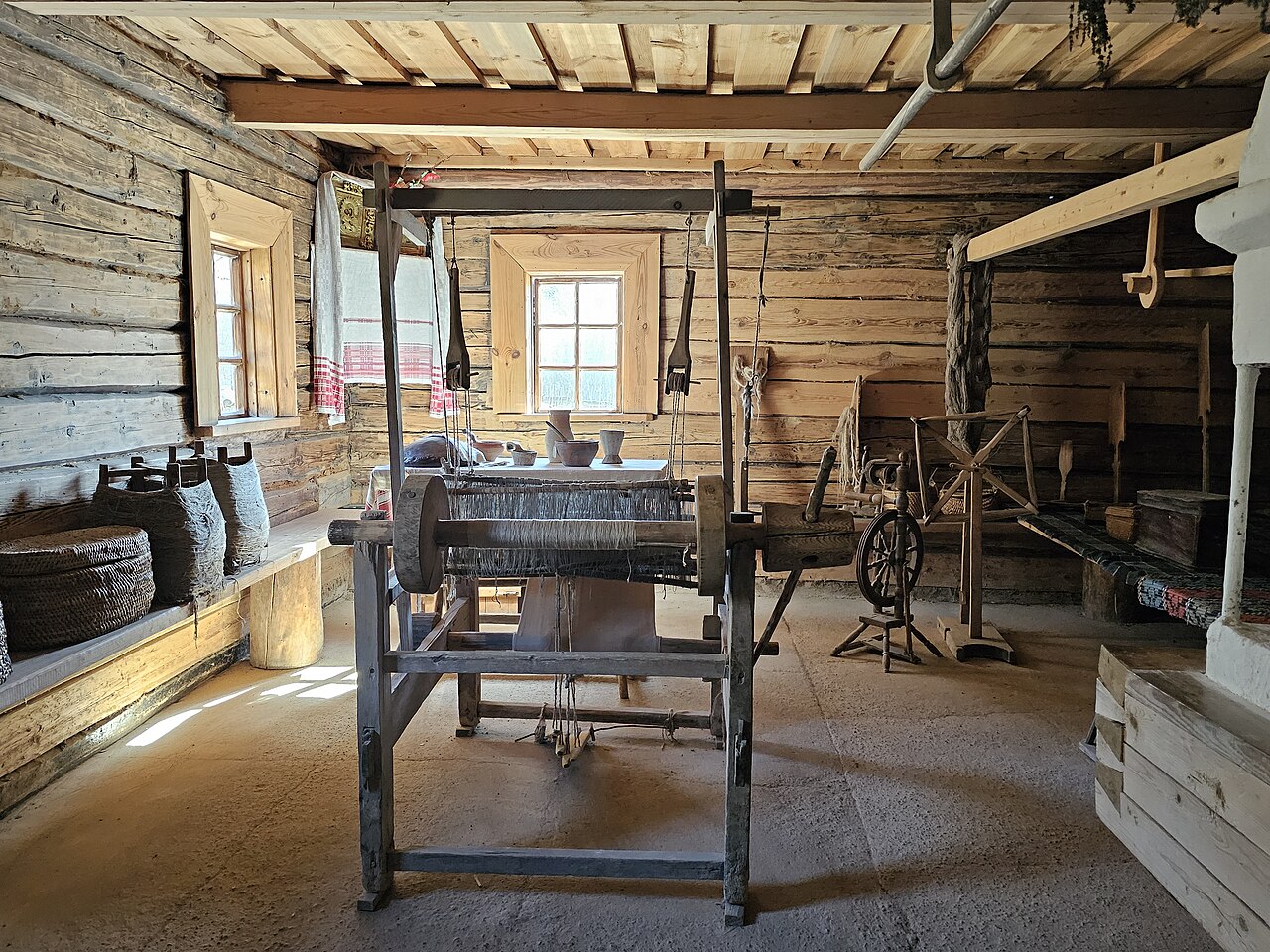
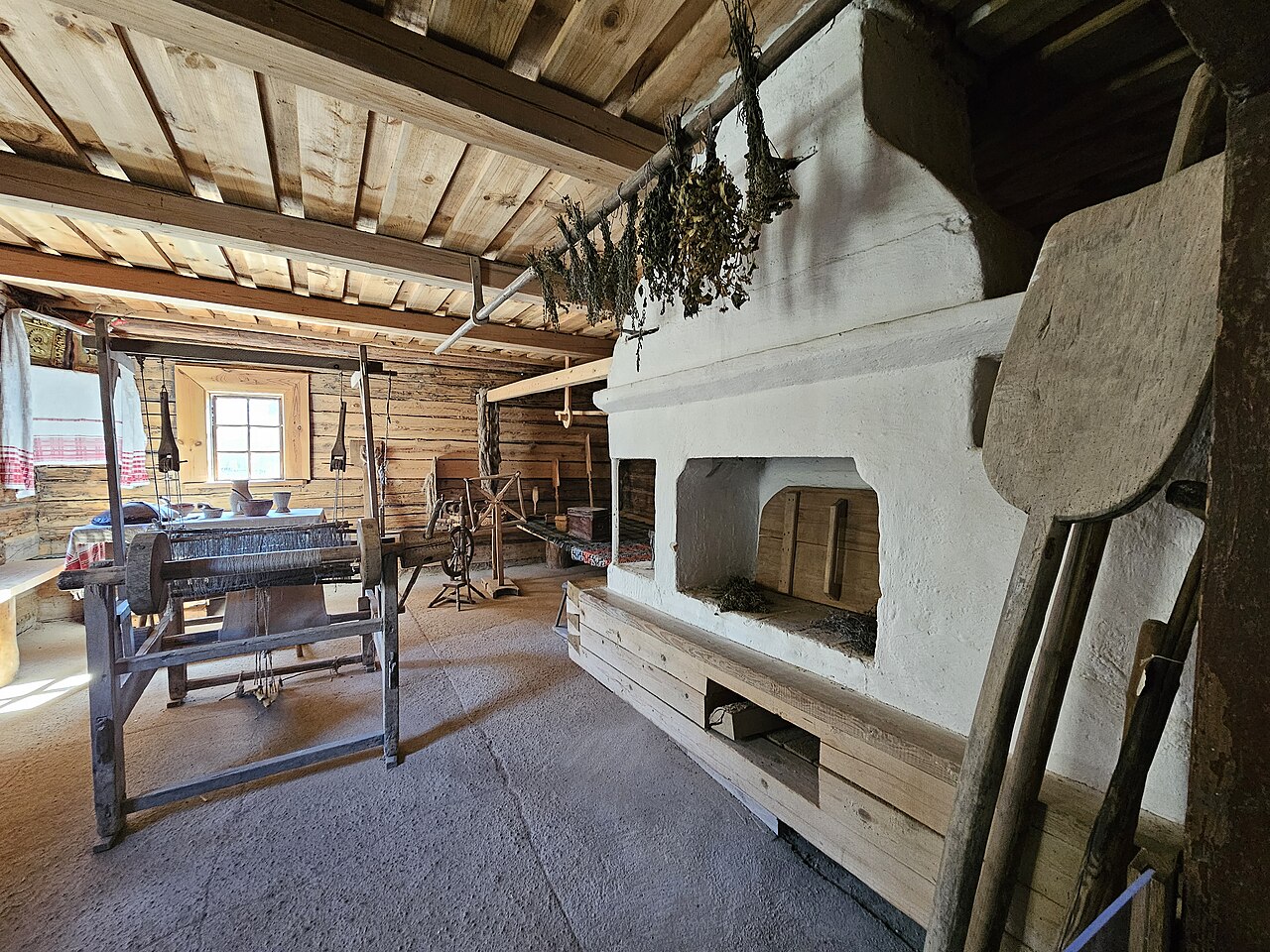
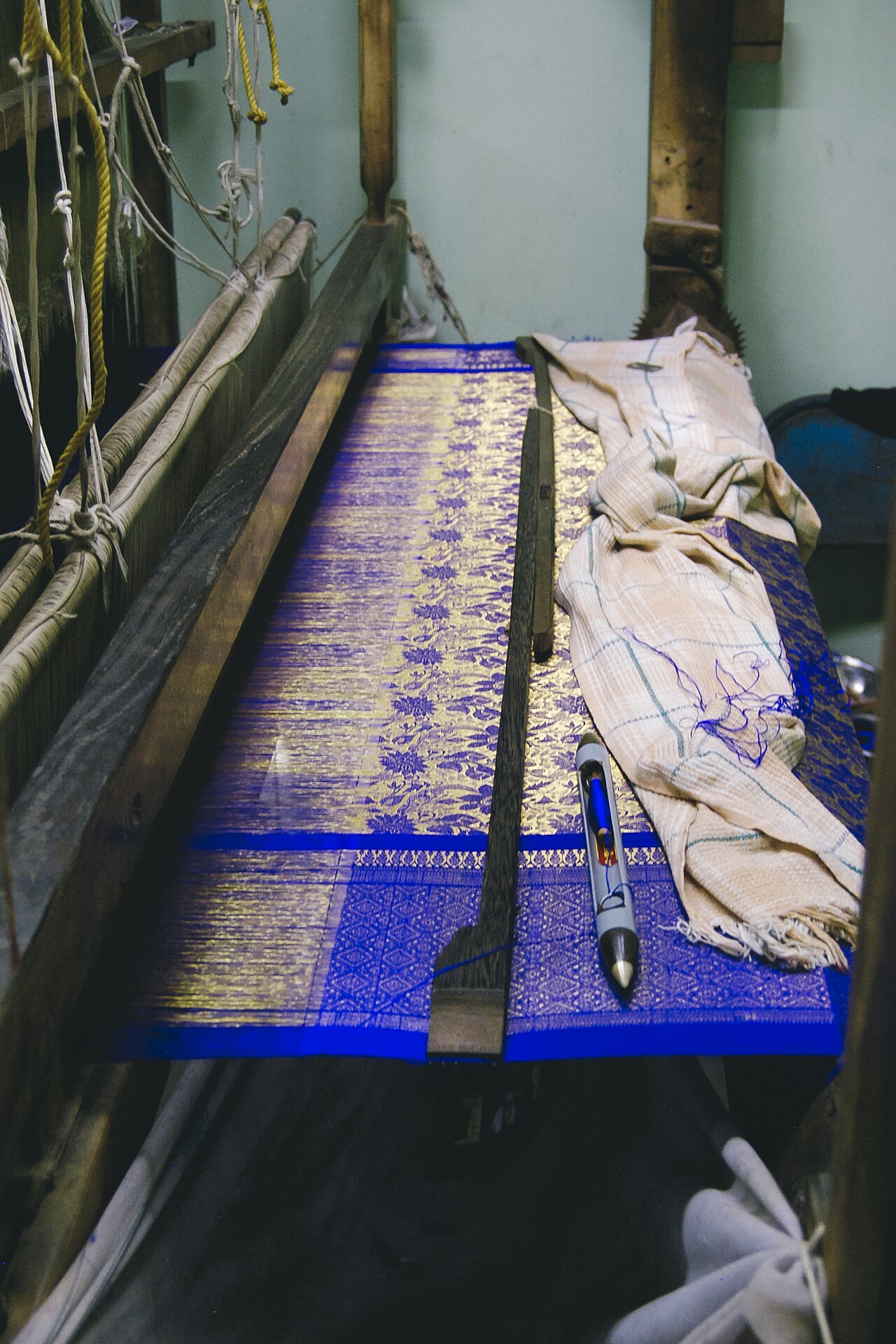
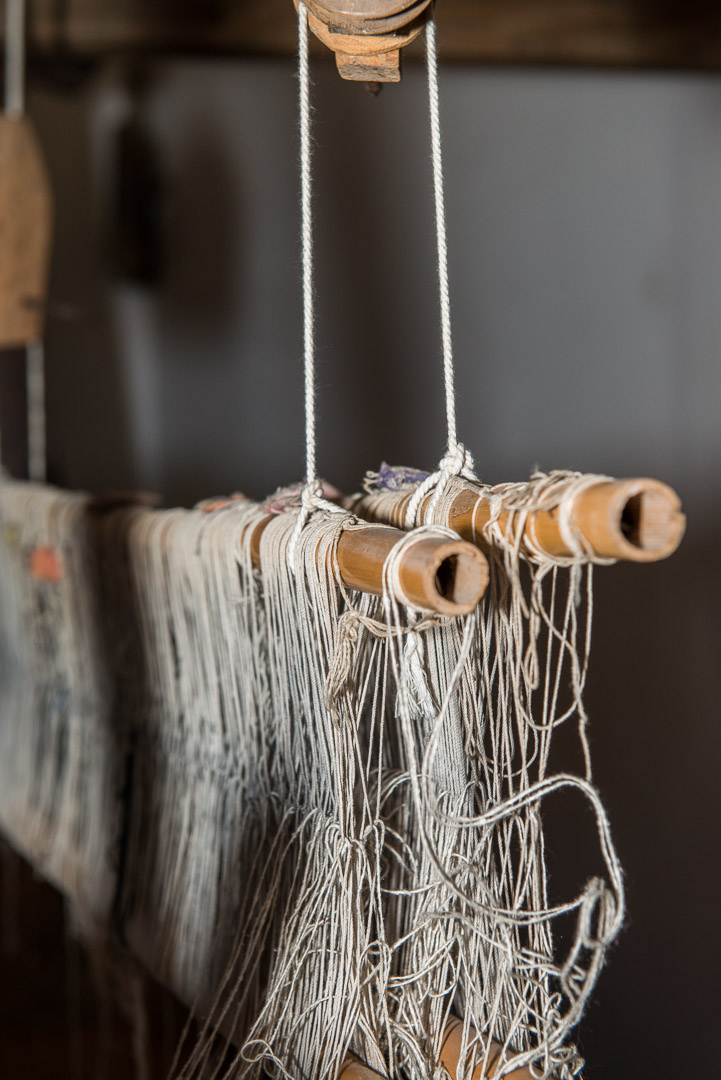
A loom is a device used to weave cloth and tapestry. Its basic purpose is to hold the warp threads under tension to facilitate the interweaving of the weft threads. The precise shape and mechanics may vary, but the basic function is the same across all types.
- field
- Textile technology
- known_for
- Holding warp threads under tension to interweave weft threads
- primary_motions
- Shedding, picking, battening
Lore & Background
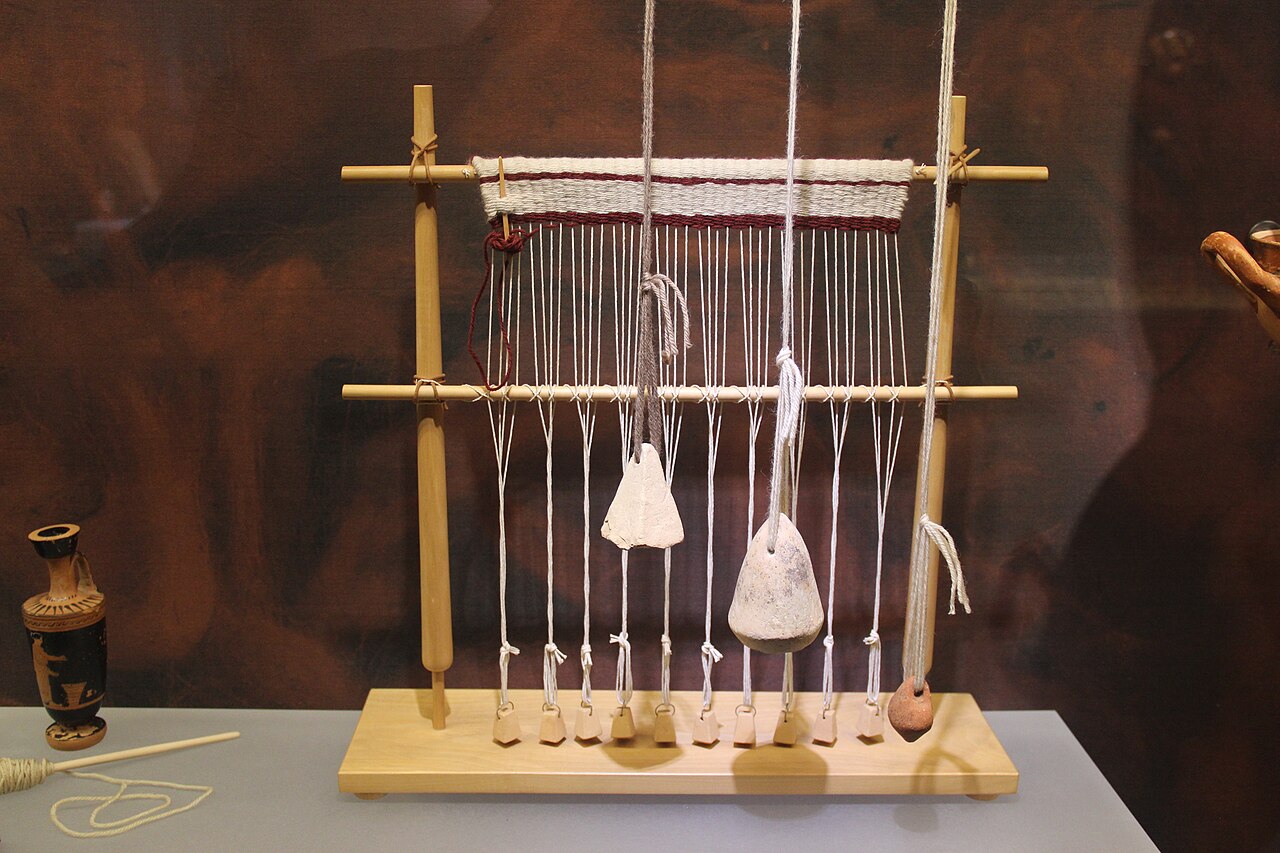
The word 'loom' derives from the Old English 'geloma', meaning a utensil, tool, or machine of any kind. Weaving is done on two sets of threads: the warp threads are stretched on the loom, and each weft thread is inserted so that it passes over and under the warp threads. The ends of the warp threads are usually fastened to two beams held apart to keep the warp taut; the beam on the finished-fabric end is called the cloth beam, and the other is the warp beam. Not all looms have two beams—warp-weighted looms have only one beam, with warp yarns hanging from it and tied to dangling loom weights.
Reader's Guide
A loom performs three principal motions: shedding (pulling part of the warp threads aside to form a shed), picking (passing the weft through the shed), and battening (compressing the weft against the fell). Two secondary motions—taking up the woven cloth onto the cloth beam and letting off warp yarns from the warp beam—are also needed. For automatic operation, a tertiary motion (filling stop motion) brakes the loom if the weft thread breaks. Looms vary widely: nomadic weavers use lighter, more portable looms, while those in cramped city dwellings use tall upright looms or folding looms. Shedding methods include heddle-bars, shed-rods, tablet weaving with punched cards, rotating-hook heddles, and rigid heddles. The loom's significance lies in its fundamental role in textile production, enabling the creation of cloth and tapestry through controlled interlacement of threads.
Did You Know?
- The word 'loom' derives from Old English 'geloma', meaning a utensil, tool, or machine of any kind.
- A warp-weighted loom has only one beam; the warp yarns hang from it and are tied to dangling loom weights.
Gallery
Frequently Asked Questions
What exactly is a loom?
A loom is a textile-technology device whose core job is to keep the warp threads stretched taut so that weft threads can be passed through them in a regular over-under pattern. Every loom, from a simple frame to an industrial machine, performs that same fundamental interweaving task.
What are the three primary motions of a loom?
The three essential motions are shedding (separating the warp into two layers to open a gap), picking (driving the weft thread through that gap), and battening (beating the newly inserted weft up against the fell line to lock it in place). These three actions cycle repeatedly to build up the fabric.
Why must warp threads be held under tension on a loom?
Tension keeps the warp threads straight and evenly spaced, which gives the weft a consistent path to travel and prevents the fabric from developing loops or uneven density. Without that controlled pull, the interlacing structure that defines woven cloth would fall apart.
What is the difference between warp and weft threads?
Warp threads run lengthwise along the loom and are the ones held under tension; weft threads run crosswise and are inserted one at a time through the shed. In simple terms, warp is the stationary backbone and weft is the moving element that gets woven in.
Do all looms work the same way mechanically?
The specific frame geometry, drive mechanism, and shedding method can vary widely—hand looms, power looms, and modern electronic looms each use different hardware. However, the underlying principle of tensioned warp, a shed, a weft insertion, and a beat-up remains identical across every type.
More in Manufacturing & Materials 1-20
Spotted an error? Know more?
This is a living reference — every entry is fact-audited, and reader corrections feed straight into our audit queue. Suggest an edit · See this site's audit record